
The Indian pharma industry is estimated to grow at 9-11 per cent in 2021-22 and in the next few quarters, it will be driven by domestic and emerging markets, according to ratings agency ICRA. In a sample of 21 Indian pharmaceutical companies, ICRA said revenue growth was moderate at 6.4 per cent in the second quarter of FY22, down from 16 per cent in the first quarter of 2021-22. The normalisation of the base and pricing pressures in the US market were the major reasons for slowing growth momentum in Q2 FY22, even as growth under domestic and emerging markets remained healthy, ICRA said in a statement.

Concerns over weakening demand for Indian pharmaceutical (pharma) drugs in the US - their largest export market - have weighed heavily on investor sentiment this year. While the Nifty 50 has gained 6.02 per cent year - to - date (as on September 15), the Nifty Pharma index has declined 5.18 per cent, National Stock Exchange data shows.
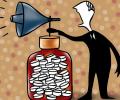
US accounts for a large part of revenue for top Indian pharma companies like Gland Pharma (54 percent), Dr Reddy's (53 per cent), and Aurobindo Pharma (48 per cent).

Indian stock market benchmark indices Sensex and Nifty experienced a significant decline, driven by escalating tensions in the Middle East and rising crude oil prices.

Hyderabad is rapidly emerging as a strategic hub for multinational companies (MNCs) deepening their focus on artificial intelligence (AI), life sciences, and global capability centres (GCCs), supported by the city's strong pharmaceutical (pharma) base, deeptech talent pool, and a policy environment that encourages high-value investment.
India's pharmaceuticals and medical devices industries are still hopeful that trade negotiations with the US could cut a fairer deal for both sides, after President Donald Trump announced a 25 per cent tariff rate on India on a social networking platform without divulging the finer details.

Indian equities on Dalal Street saw volatility. Track Sensex, Nifty50 movement and key market drivers for Feb 25, 2026.
Indian equity markets experienced a significant downturn, with the Sensex and Nifty plummeting due to rising crude oil prices, geopolitical tensions in West Asia, and continuous foreign fund outflows.
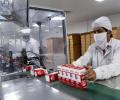
When compared to the domestic sales of April 2019, the growth is around 37 per cent. However, compared to the previous month (March), the growth is 18.4 per cent.

Sun Pharmaceutical Industries on Wednesday posted a 2.56 per cent increase in its consolidated net profit to Rs 3,118 crore for the second quarter ended September 30, aided by robust sales in India and emerging markets. The Mumbai-based drug major reported a net profit of Rs 3,040 crore for the July-September quarter of the last fiscal.

India's merchandise exports experienced a slight decrease in February, while imports surged due to increased gold and silver purchases, leading to a widened trade deficit. The West Asia crisis is expected to further impact trade in the coming months.

Amid controversy over USPresident Donald Trump's comments linking the use of Tylenol and other related paracetamol products by pregnant women to autism in children, experts and industry executives say that since India's export of the drug to the US is less, it will hardly affect the country's pharma exports to America.

The Central Drugs Standard Control Organisation (CDSCO) will conduct testing, inspection and auditing of cough syrup manufacturers.

Stock market benchmark indices Sensex and Nifty ended 2.5 per cent higher on Tuesday after India and the US agreed to a trade deal under which Washington will bring down the reciprocal tariff on Indian goods to 18 per cent.

As the potential threat of a steep 200 per cent tariff on pharmaceutical imports hangs in the air, analysts and industry insiders feel that focus on exports to non-US regions as well as domestic market will increase as a long-term trend. US President Donald Trump told CNBC's Squawk Box in the first week of August that planned tariffs on import of pharmaceutical products to the US could eventually reach up to 250 per cent.

In May, price growth for drugs was in negative territory at (-)1 per cent

Commerce and Industry Minister Piyush Goyal announced that an interim trade agreement between India and the US is likely to be signed in March and operationalised in April, with chief negotiators meeting in Washington to finalize the details.

Most pharma shares dropped, dragging the BSE Healthcare index down by 2.14 per cent after Trump's move to impose 100 per cent import tariffs on pharmaceutical drugs from October 1. Wockhardt shares tanked 9.4 per cent.

Benchmark stock indices Sensex and Nifty dived sharply by nearly 2 per cent on Sunday after Finance Minister Nirmala Sitharaman proposed a hike in the Securities Transaction Tax (STT) on derivatives. Reversing the early gains, the 30-share BSE Sensex plunged sharply by 2,370.36 points or 2.88 per cent to slide below the 80,000-mark at 79,899.42 in afternoon trade as the finance minister announced a hike in STT on futures contracts to 0.05 per cent from the current 0.02 per cent.

rediffGURU Patrick D'souza, CAT expert and founder of Patrick100 explains how to pick a management course and college that will boost your career.

The fiscal tilt towards capex benefits companies in investment-related sectors like capital goods, defence equipment, engineering & construction and metal & mining. The planned cut in revenue expenditure will weigh on companies in consumption sectors like FMCG, consumer durables and retail.

Ahead of the key meeting called by the steel ministry with the industry captains on Monday to discuss the impact of rising steel imports, companies have raised the issue of cheaper 'substandard' inflows from China, Vietnam, and South Korea, saying they are setting the benchmark for domestic prices and squeezing the profitability of Indian producers.

Restoring weighted tax deductions and adopting a petty patents regime can foster firm-level innovative activity critical for competitiveness, points out Nagesh Kumar.

The rationalisation of goods and services tax (GST), announced on Wednesday, directly lowers the cost of everyday medical consumables, and also high-end therapies in oncology and rare diseases, helping reduce out-of-pocket patient expenditure and better adherence to medication.

Both countries commit to provide each other preferential market access in sectors of respective interest on a sustained basis

This year's Economic Survey and the Union Budget were more closely followed for more reasons than one.

The market capitalisation of BSE-listed companies eroded by Rs 9,40,581.75 crore to Rs 4,50,61,658.60 crore (USD 4.90 trillion) in a single day.

Pharma body wants all excisable goods used for R&D purposes should be exempted from central excise duty.

The government on Sunday gave a strong push to upgradation and expansion of healthcare infrastructure, medical education and pharma sector with the Union Budget 2026-27 announcing a slew of steps, including those aimed at making India a global hub for allied healthcare professionals and biopharma manufacturing.

The US Food and Drug Administration's (USFDA)'s new draft guidelines aimed at speeding up and reducing the cost of developing biosimilars - lower-priced, near-replicas of complex biologic medicines - could significantly benefit Indian biotech companies.

Tech Mahindra, HCL Tech, State Bank of India, UltraTech Cement and HDFC Bank were also among the gainers. In contrast, Eternal, Asian Paints, Bharat Electronics, Sun Pharma and Maruti were among the laggards.

Reliance Industries cracked 4.42 per cent, while ITC, Kotak Mahindra Bank, InterGlobe Aviation, and HDFC Bank were also among the laggards. However, ICICI Bank, Sun Pharma, Hindustan Unilever, and State Bank of India were among the gainers.

From the 30-Sensex firms, Bajaj Finance, Asian Paints, HCL Tech, Tata Consultancy Services, Eternal and Sun Pharma were among the biggest laggards. However, Titan, NTPC, Axis Bank, UltraTech Cement, Reliance Industries and Hindustan Unilever were the gainers.

From the 30-Sensex firms, NTPC, ICICI Bank, Adani Ports, Bharti Airtel, Sun Pharma and Bajaj Finance were among the biggest laggards. However, Asian Paints, HCL Tech, Bharat Electronics and Reliance Industries were among the gainers.

From the 30-Sensex firms, Tata Steel, Kotak Mahindra Bank, Reliance Industries, Axis Bank, Titan and Trent were among the biggest gainers. However, Tata Consultancy Services, Tech Mahindra, Infosys, Bajaj Finance and Sun Pharma, were the laggards.


Reiterating Sitharaman's statement that this is a youth power budget, Modi emphasised that the provisions made in the budget will prepare leaders, innovators and creators across different sectors.

After two years of strong gains, smallcap stocks fell sharply in 2025, but the correction may be setting up opportunities for long-term investors.

'Given that India underperformed emerging markets by 28 per cent in 2025, the worst performance in over 30 years, the timing of the sharp STT hike could have been better.'

From the 30-Sensex firms, Bharat Electronics, Power Grid, Tata Motors Passenger Vehicles, Asian Paints, Reliance Industries, and Bajaj Finserv were among the biggest gainers. However, HCL Tech, Kotak Mahindra Bank, ICICI Bank, and Sun Pharma were the laggards.
 © 2026 Rediff.com - Advertise with us - Disclaimer - Privacy Policy - Sitemap - Feedback - About us - Terms of use - Grievances